


Diving Into The World Of Video Games To Connect With Kids - A Support Worker's Perspective


Diving into video games to connect with autistic and neurodivergent kids
By Lily, Children's Support Worker at Autism & Beyond
Screens can feel tricky. I hear that a lot. I also see how helpful games can be when we step in with kids. I join them. I learn the controls. I let them teach me. The shift is real.
When I co play, connection grows fast. Kids light up when they are the expert. I start to see strengths that do not always show up at school. They explain steps in order. They plan a route. They solve problems under pressure. They breathe through a loss, reset and try again. Hands and eyes work together. Confidence rises because someone trusted them to lead.

I turn game skills into life skills in the moment. I keep it short and specific. You explained that so clearly. That helps with group work. You tried again after losing. That helps when homework is hard. You asked for a break when the sound was too much. That is self advocacy. You shared your resources with me. That is teamwork. Naming the behaviour and linking it to real life helps kids see their own progress.
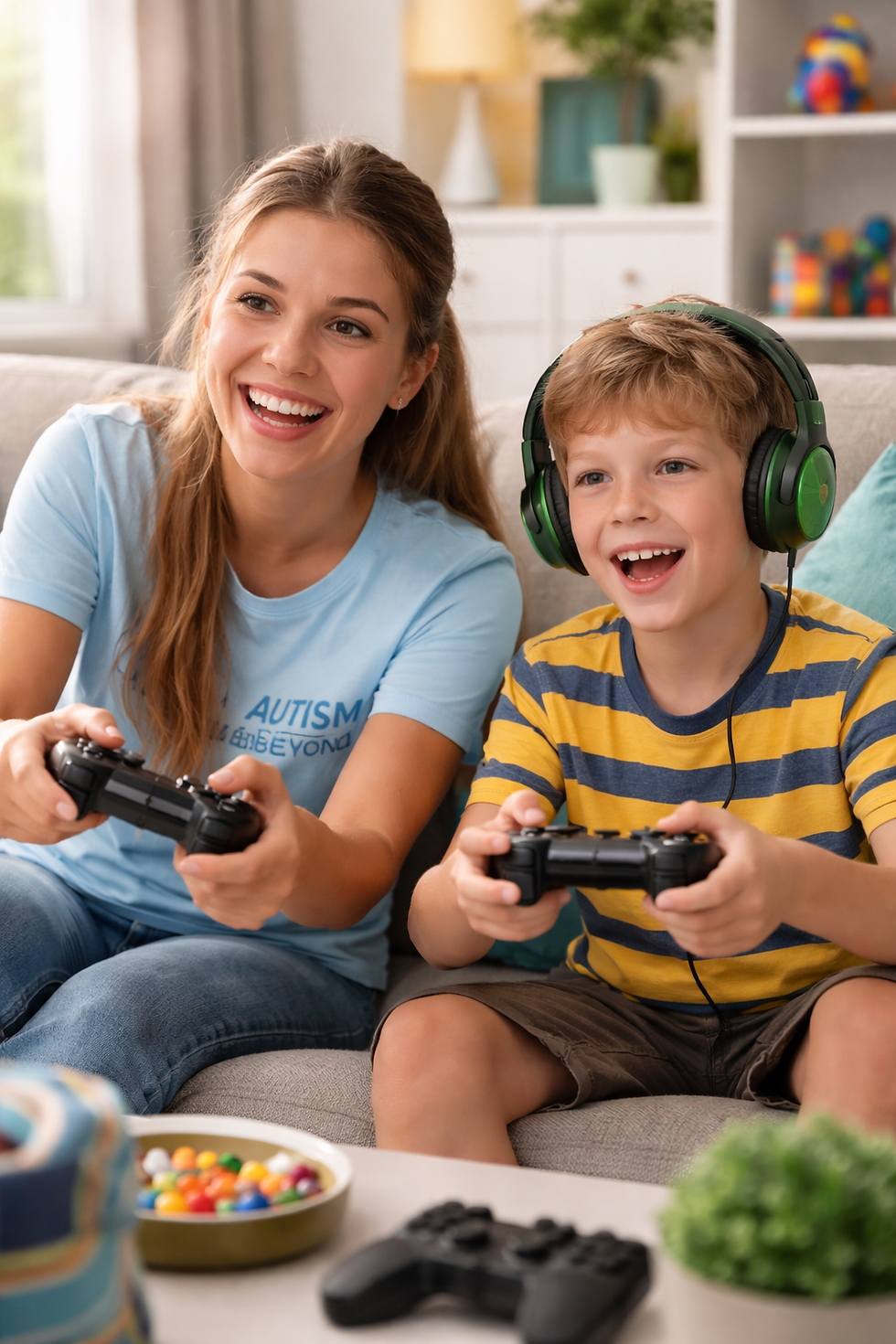
If you want to try co play at home, start small. Pick a calm game your child already loves. Tell them you want to learn and ask them to be your coach. Agree on start time, play time and what happens after. Sit side by side and let them lead. Ask gentle questions. Celebrate tiny wins. End well with a simple countdown and a high five, then move to a snack or a short walk.
House rules can stay simple and kind. Choose games together. Use kind words. Take turns. Pause for a stretch and water every so often. Tidy for one minute at the end. Switch to the next activity you agreed on. Predictability helps everyone.
Sensory support matters. Gaming can be bright and loud. Lower the brightness and volume. Use warm light in the room at night. Offer a comfy seat, a fidget or a weighted lap pad. Build short movement breaks between levels. After sunset, blue light glasses can protect sleep and make bedtime smoother.

Online safety does not have to break trust. Turn off open chat or set it to friends only. Keep screens in shared spaces. Create a family code word for stop or help. Review friend lists together once a week. Make it a routine, not a gotcha.
Choose video games that bring you together. Teamwork and creativity work well. Sandboxes. Building games. Fishing modes. Cooperative adventures. Leave fast online combat for later if needed. Ask your child to pick the calm option to begin with, then build from there.
Tricky moments still happen. If the sound feels intense, pause for water. If hands look tense, take two slow breaths together. If I am stuck, I ask for the first two steps again. When a loss hits hard, I name the effort and suggest a new plan. Small repairs teach recovery.

Think about screen time as a rhythm, not a fight. Set clear windows for play. Anchor them before or after homework, dinner or outside time. Use simple countdowns. Offer a choice for the next step. Brush teeth then story, or bath then story. The goal is calm endings that you can repeat.
Games can lead you off screen too. If your child loves a fishing game, try simple casting on the weekend. If they love building, set up Lego or cardboard the next day. If they explore nature maps, plan a short bush walk on Saturday. Interests make great bridges.
What I tell parents is simple. Co play is not rewarding screens. It is rewarding connection.
You are coaching social and emotional skills in a place your child feels safe and motivated. Ten minutes can change the mood of an evening. When we join kids in what they love, they often meet us halfway in what we need.
Lily

Disclaimer:
This disclaimer governs your use of Autism & Beyond website and blog. By using this website, you accept this disclaimer in full. If you disagree with any part of this disclaimer, do not use this blog, this website or any affiliated websites, properties, or companies. We reserve the right to modify these terms at any time. You should therefore check back periodically for changes. By using this website after we post any changes, you agree to accept those changes, whether or not you have reviewed them.
All information and resources found here are based on the opinions of the author unless otherwise noted. All information is intended to motivate readers to make their own nutrition and health decisions after consulting with their health care provider. I am not a doctor, lawyer, psychiatrist, therapist, or your mother, and I don’t play one on the internet.
The author of this site encourages you to consult a doctor before making any health changes, especially any changes related to a specific diagnosis or condition. No information on this site should be relied upon to determine diet, make a medical diagnosis, or determine treatment for a medical condition. The information on this website is not intended to replace a one-on-one relationship with a qualified health care professional and is not intended as medical advice.
NO information on this site should be used to diagnose, treat, prevent or cure any disease or condition.
None of the posts and articles by Autism & Beyond may be re-printed without express written permission of the author. Autism & Beyond will respond to written requests to re-print parts of posts and excerpts/quotes (10% or less) may be reprinted with attribution as long as all links are left intact.


Comments